Sights of Megrelia
Sights of Megrelia
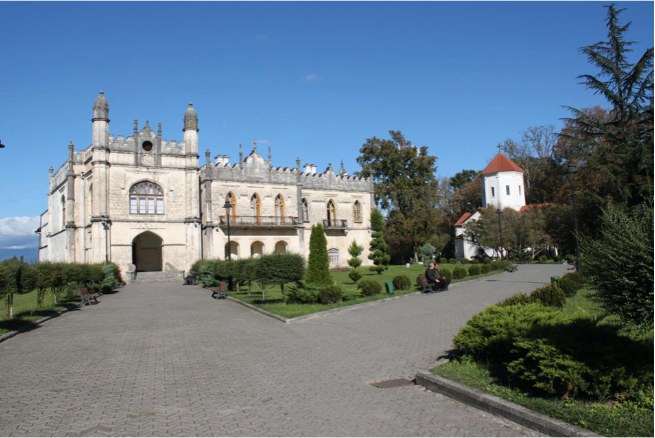
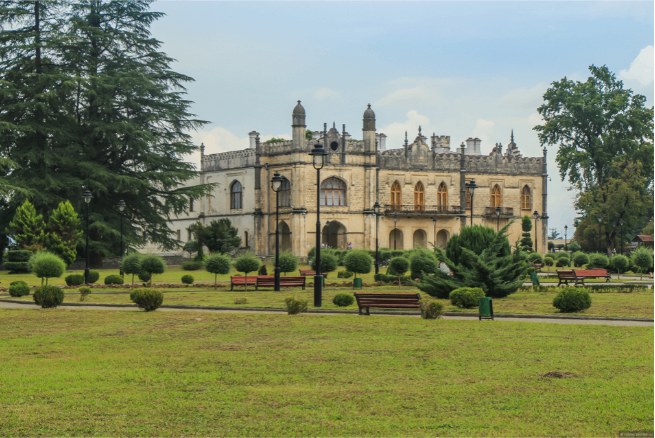
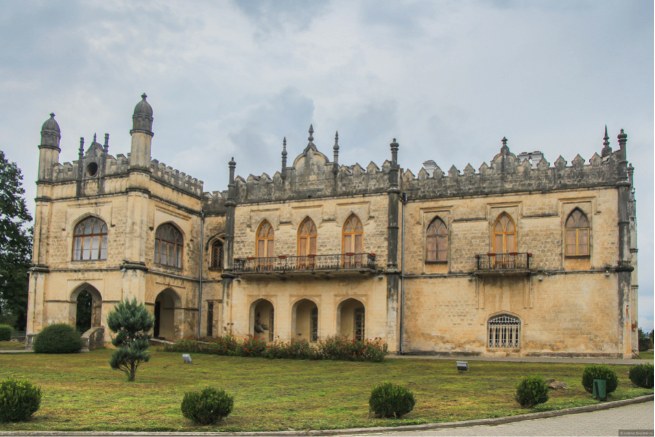
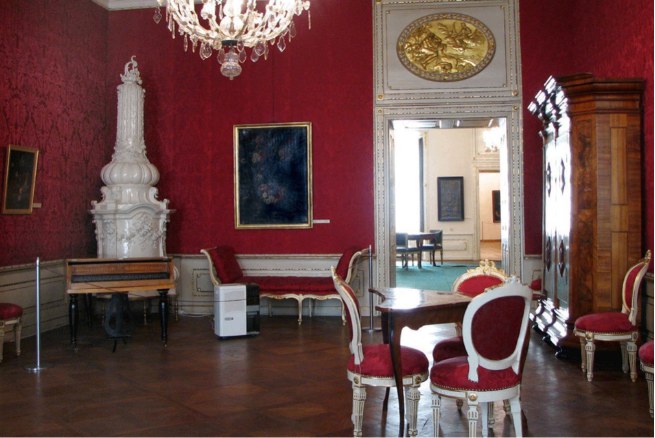
The Palace of the Dadiani Princes
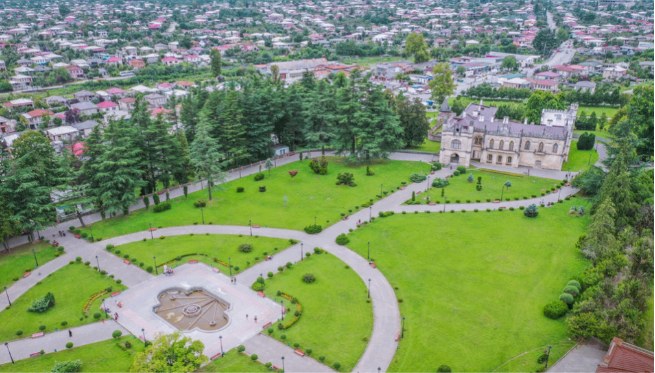
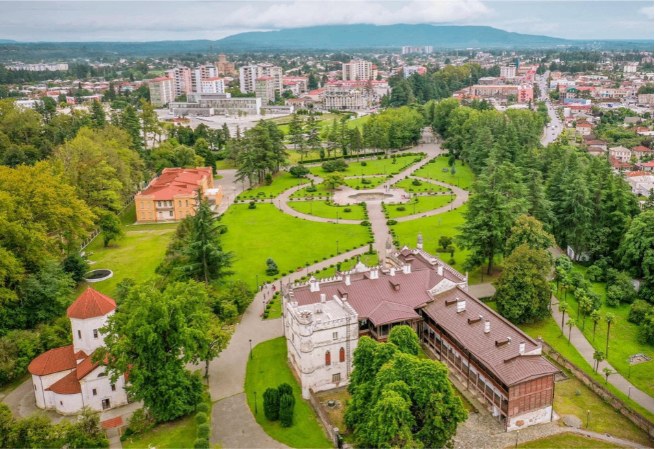
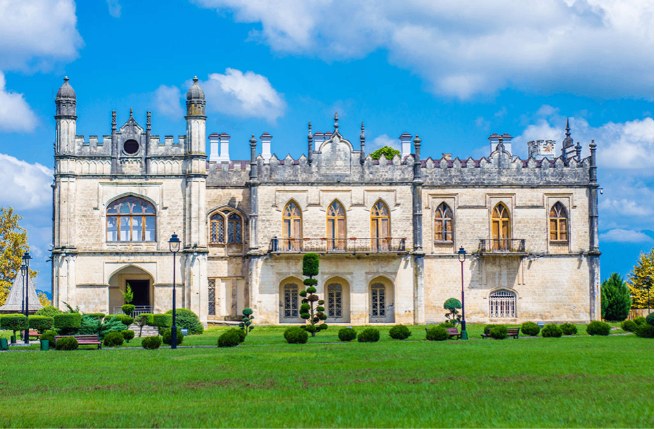
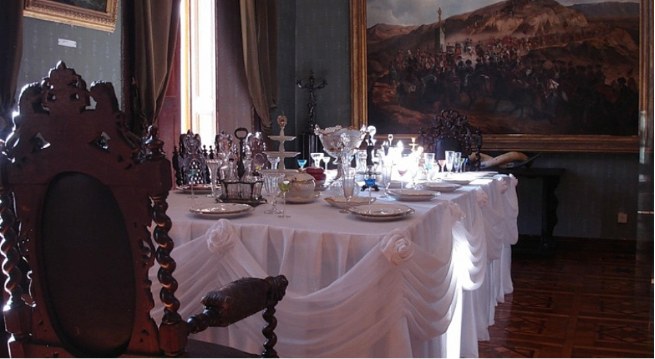
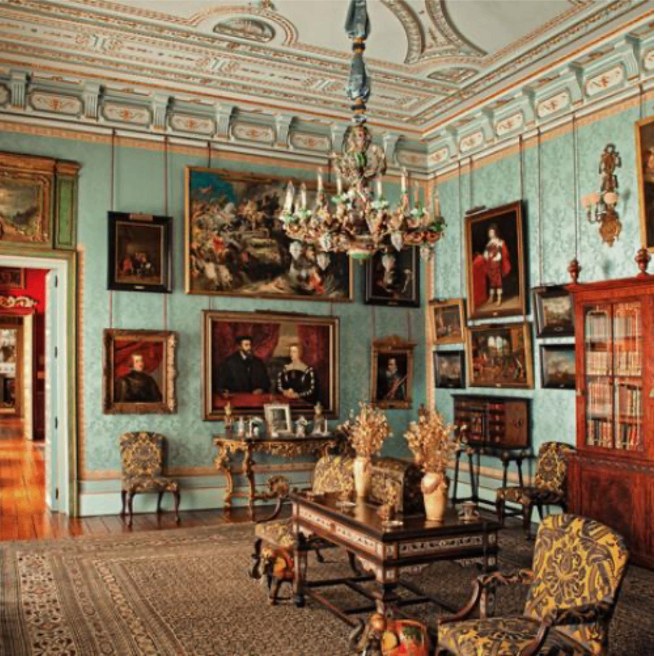
The elegant ancestral palace of the Mingrelian princes Dadiani is a true adornment of the city, testifying to its former importance.
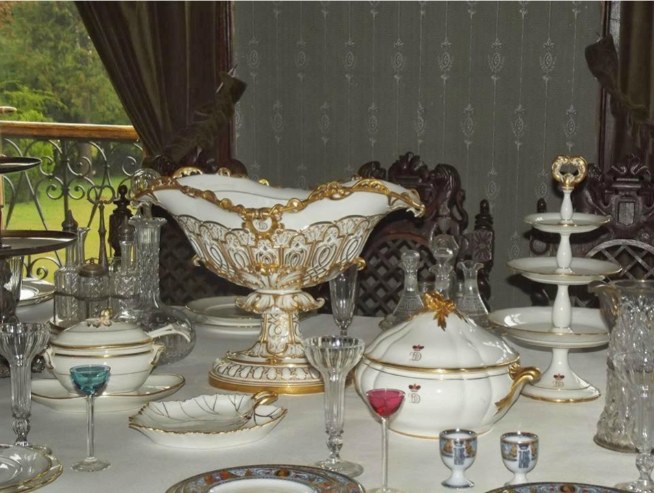
The Dadiani family is an ancient aristocratic house, known for its kinship with Napoleon Bonaparte himself: one of the Dadiani princesses was married to Napoleon's nephew Achille Murat. For this reason many relics connected with Napoleon passed to the Dadiani princes by inheritance — several personal belongings and pieces of the emperor's furniture, and one of his three death masks (the other two are in France and England). All this was formerly kept in the family museum of the Dadiani Palace.
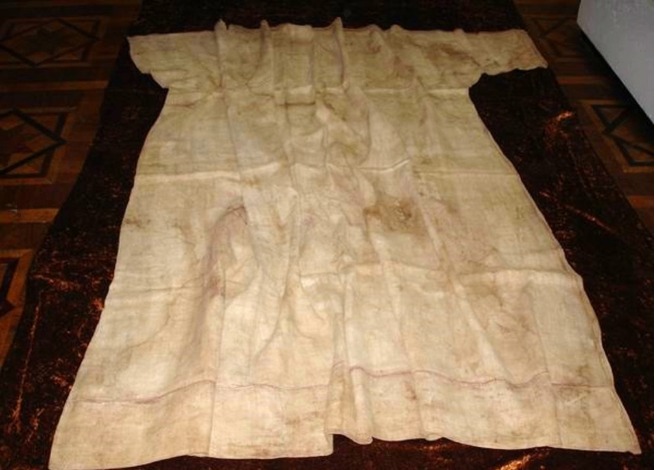
There is an even more significant relic here — the shroud of the Virgin Mary. According to tradition, the ancestors of the Dadiani princes brought the shroud from Byzantium to Western Georgia in the 15th century. It can be seen only on great church feasts.
The estate of the Dadiani princes is also famous for its garden: in the middle of the 19th century the ruler of Mingrelia, Princess Dadiani (née Chavchavadze, sister of Nino Chavchavadze, the widow of Alexander Griboyedov), invited renowned European gardeners and ordered rare plant varieties from Europe. Today the Dadiani garden is the Zugdidi Botanical Garden, covering 26.4 hectares; some of its trees are about 200 years old and are unique specimens on the Eurasian continent.
The palace belonged to the sovereign princes of Mingrelia David Dadiani and Ekaterine Chavchavadze. Besides the main building, the museum complex includes the palace church and the Dadiani botanical garden. The museum in the palace was opened by the prince himself, who displayed archaeological finds from Nokalakevi, European and Georgian weapons and a unique collection of works of art.
Today the Zugdidi historical and ethnographic museum keeps about 44,475 exhibits dating from different epochs, from the 19th century BC to the 1st century AD. Among them a special place is held by church ornaments and works of art, relics of the royal and imperial houses of Europe, and the famous Dadiani library, which holds one of the first editions of "The Knight in the Panther's Skin" and the most ancient "Moktsevai Kartlisai" (the Kartlian chronicle). Among the other treasures is the death mask of Napoleon Bonaparte — only two more such masks exist, both in France.
It came here largely thanks to the marriage of Murat's descendant Achille to Salome of the Dadiani family. The main place among all the exhibits, however, belongs to the tunic of the Mother of God, brought here from Constantinople after its fall in 1453. It was kept first in the Bedia Temple, then in the church of Khobi, and in 1533 it was transferred to the palace by order of Prince Levan Dadiani. Relics of many saints are also kept here: the elbow of St. Marina, the hand of St. Kvirike, part of the femur of St. George and part of a bone of St. John the Forerunner.

Zugdidi
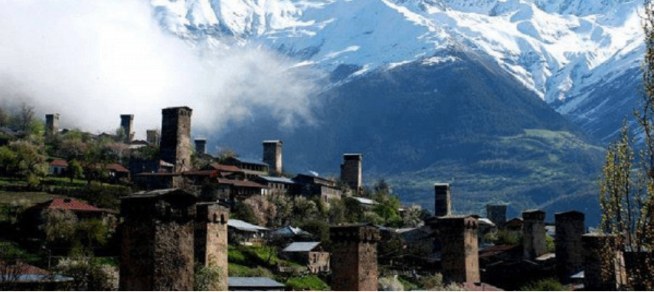
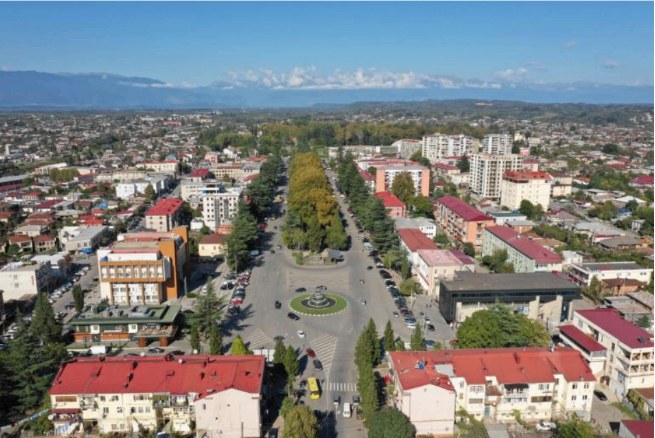
Zugdidi, the capital of Megrelia, lies between the Black Sea and the snow-capped ridges of the Caucasus — a city of gardens, towers and mountain views, and the seat of the princely residence.
The Martvili Monastery
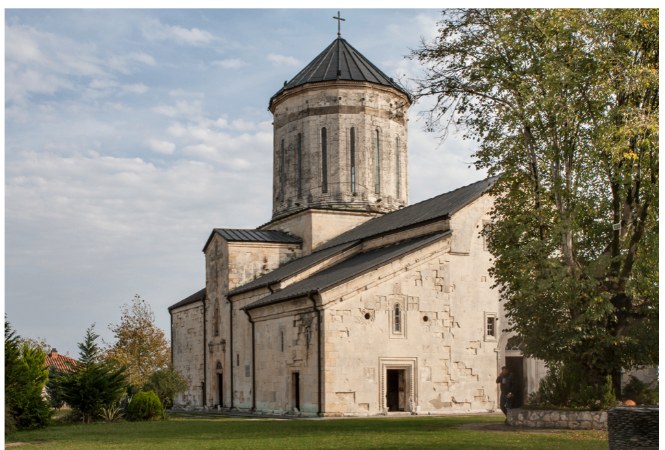
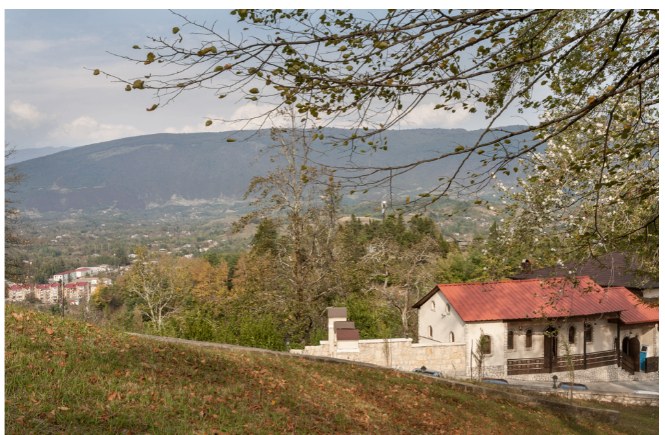
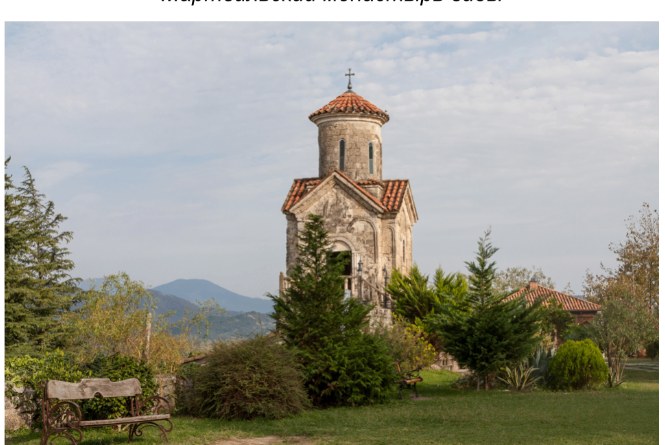
In antiquity Martvili was called Chkondidi. In the 7th century a monastery of the holy martyrs was built here. In the 10th century the Chkondidi bishopric was created. The monastery church is dedicated to the Mother of God. In the Middle Ages a well-known centre of enlightenment was located here.
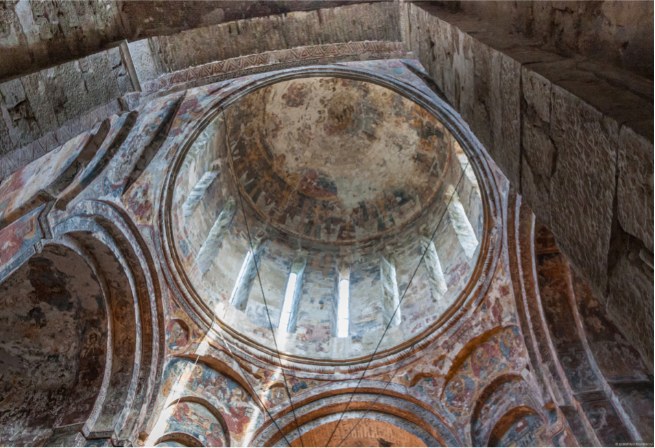
Many famous scholars, writers and copyists worked in the church, and it had a rich library. The central domed church is crowned with a cross and adorned with tiles and carving, whose figures and floral ornament create a single picture of scenes from the Old and New Testaments. Frescoes of the 14th–17th centuries have survived in the church to this day. Next to the main building stands a two-storey church of the 10th century.
The monks and abbots of Chkondidi enjoyed particular honour in Georgia, and for a long time it was the abbot of the Chkondidi monastery who was appointed to the office of Mtsignobartukhutsesi (chief counsellor) and bore the title "Chkondideli — Mtsignobartukhutsesi and first vizier of the king", often carrying out the most important royal missions. Examples are the appointment of Svimon Chkondidel-Bedieli-Alaverdeli as governor of Ani by King David the Builder, and the embassy to the camp of Batu entrusted to Arsen Chkondideli by Princess Rusudan.
The monastery in Samegrelo had a famous scriptorium — the workplace of monk-copyists, where books were translated and original works created. Here worked Giorgi Chkondideli — Mtsignobartukhutsesi, tutor and closest associate of King David IV. Anton Gnolistavisdze, an outstanding figure of the age of Queen Tamar, was also of Chkondidi.
Tsalenjikha Cathedral of the Saviour
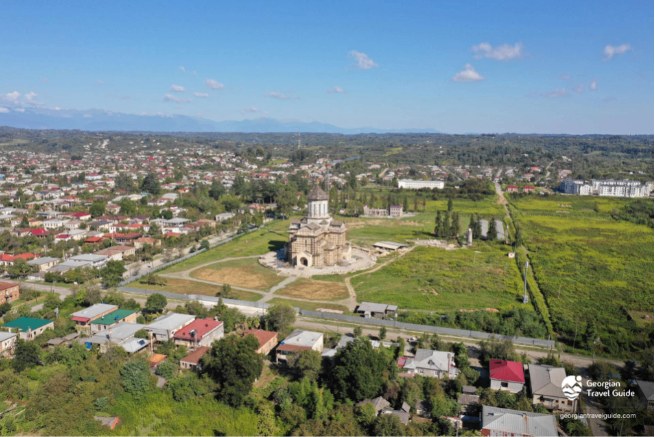
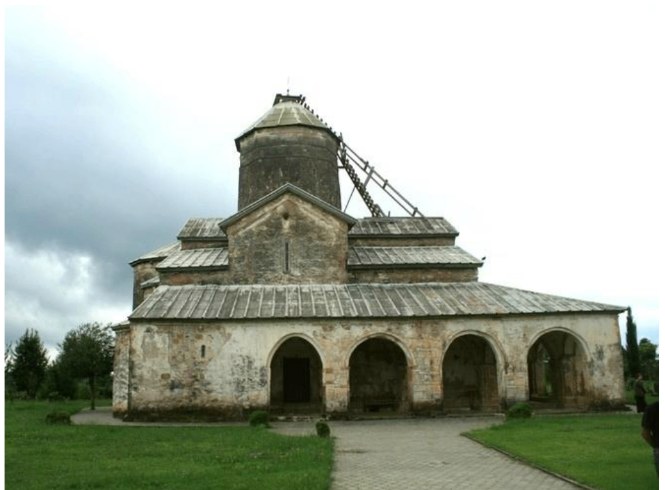
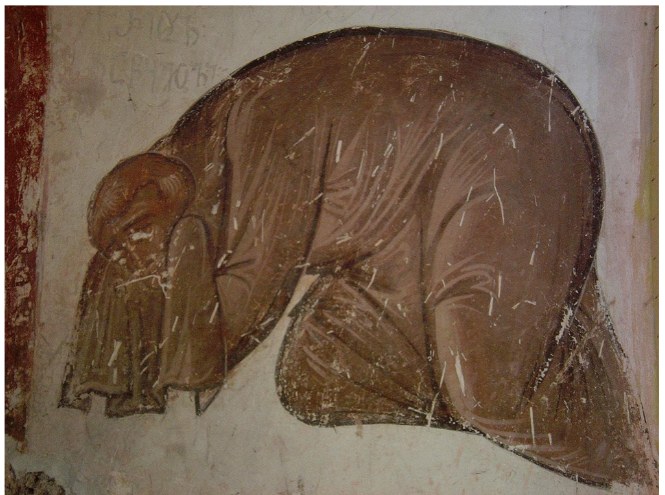
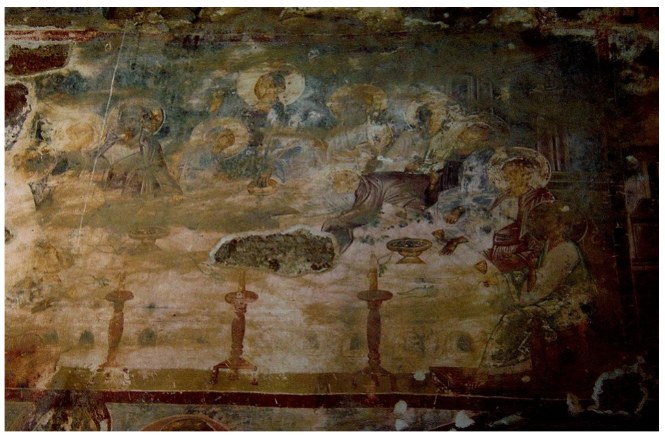
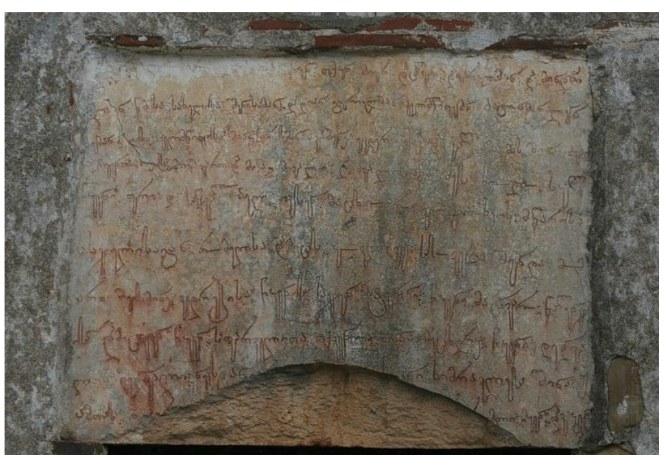
Tsalenjikha Cathedral stands on a hill at the edge of the town. According to surviving Georgian and Greek inscriptions, its interior was painted by the Constantinopolitan artist Cyrus Manuel Eugenikos at the command of Prince Vameq Dadiani (1384–1396).
The eastern part of the cathedral contains the resting places of Levan Dadiani and his wife Nestan-Darejan. The church preserves remarkable medieval frescoes and inscriptions, making it one of Samegrelo’s most important monuments of sacred art.
Tsaishi Cathedral
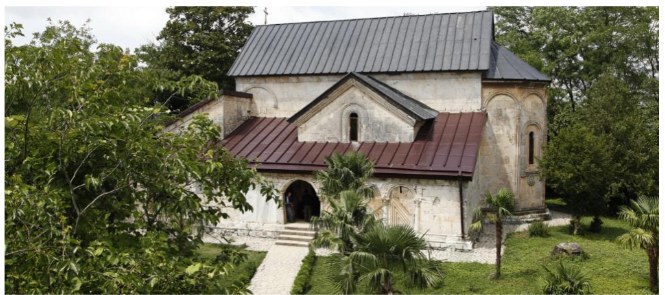
The Cathedral of the Dormition at Tsaishi is among Georgia’s oldest episcopal churches. A bishop’s seat existed here by the 6th–7th centuries, and the Tsaishi eparchy is recorded in lists dating to 602–610.
The present domed church was built between the 13th and 14th centuries on the site of an earlier basilica. Bishop Malachia Gurieli restored it after the earthquake of 1614, while Bishop Grigol Chikovani regained church lands, built the enclosure and bell tower, and strengthened its role as a centre of education.
The monastery was closed and abandoned after the Bolshevik arrival, then restored in 1989 with the blessing of Catholicos-Patriarch Ilia II of Georgia.
Khobi Monastery
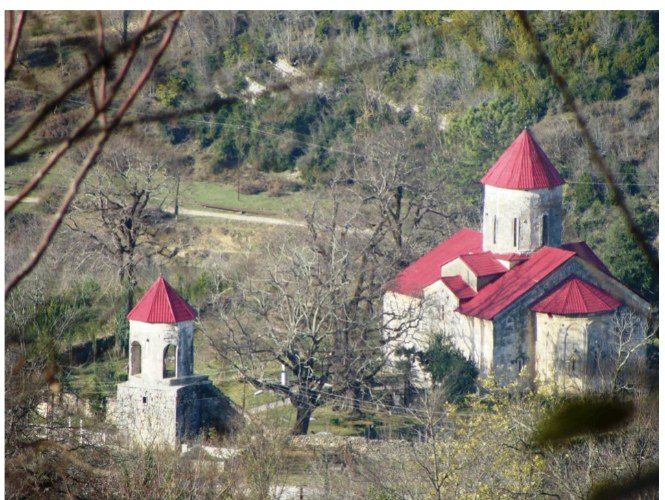
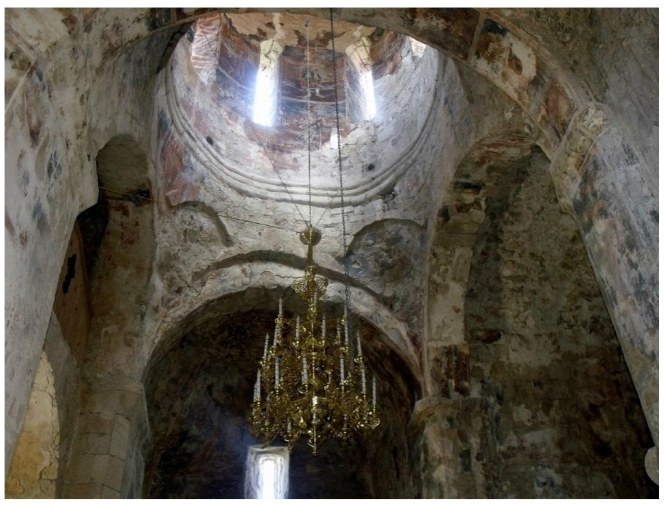
Khobi Monastery stands on the left bank of the Khobi River, three kilometres from the modern town, in the village of Nojikhevi. Its architectural complex includes the church, bell tower, enclosure and auxiliary buildings.
Dating mainly from the 13th–14th centuries, it is decorated with frescoes and stone carving. Tradition records that some of Samegrelo’s greatest relics were kept here, including the tunic of the Mother of God, the cross of King David and icons and relics of saints.
Poti Cathedral
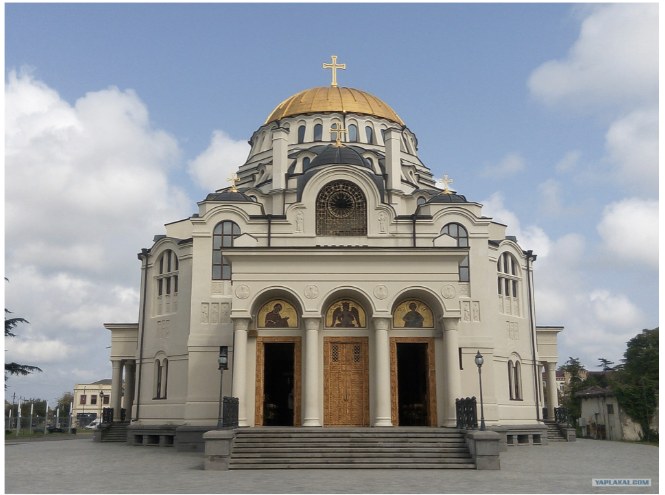
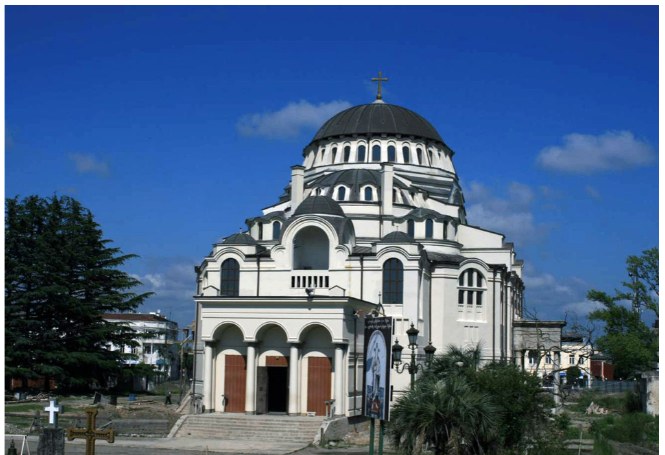
Poti Cathedral is a distinctive Byzantine Revival church. Its construction was commissioned in 1895, and the foundation was consecrated in 1906 by Bishop Guria-Mingrelian Giorgi Aladashvili. The cross was raised over the dome on 22 May 1907.
The cathedral was conceived as a reduced copy of Hagia Sophia in Constantinople, accommodating about 2,000 worshippers. Its frescoes combine Byzantine, Georgian-Byzantine and Russo-Byzantine traditions. In 1932 the church was converted into a theatre; in 2005 it was returned to the Georgian Orthodox Church, and restoration followed.
Nokalakevi — the Fortress City
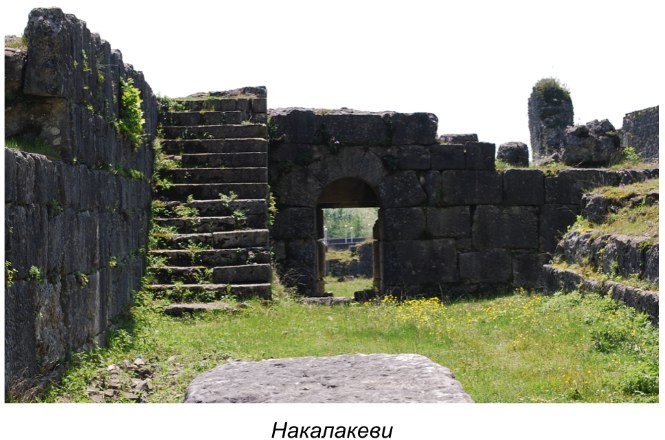
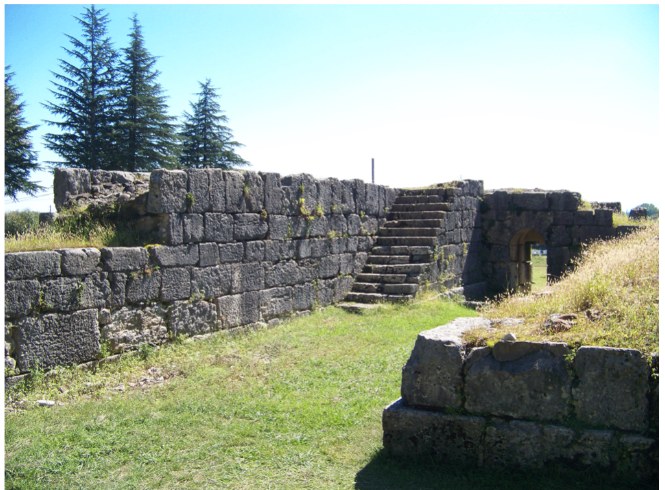
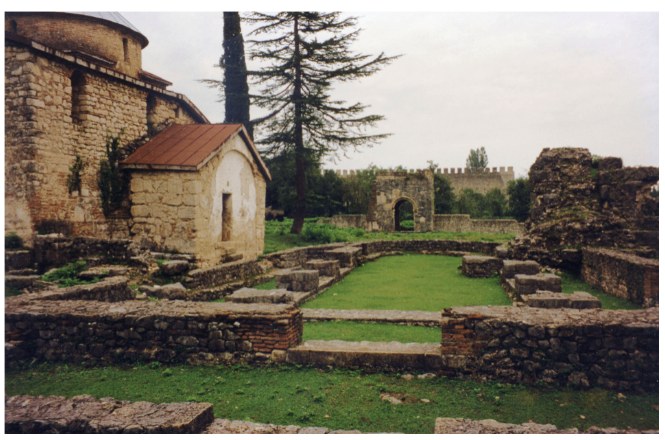
Nokalakevi, known in historical sources as Tsikhegoji and Archaeopolis, is one of Georgia’s oldest and most important archaeological and architectural monuments. Finds from its earliest layers date to the 8th–7th centuries BC, while gold, silver, bronze and glass ornaments and imported and local ceramics illuminate its ancient life.
Its strategic architecture made the city nearly impregnable: three defensive walls, towers, gates, secret passages, a route to a spring cave and a water channel protected the settlement. Georgian chronicles record its destruction during an Arab invasion in the 8th century.
From the 15th to the 18th centuries Nokalakevi again gained political importance as a residence of the Dadiani princes.
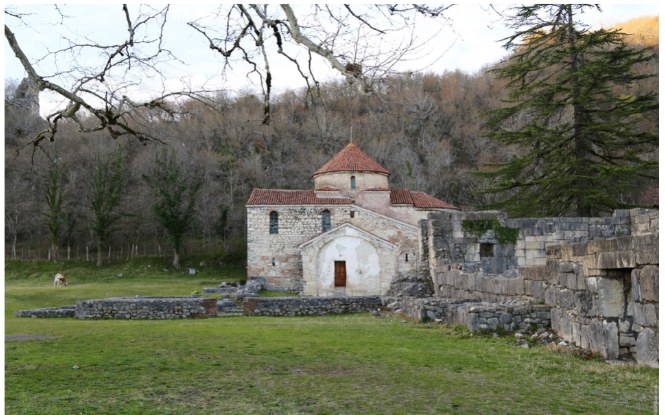
Anaklia
Anaklia is a Black Sea resort settlement near the administrative boundary of Abkhazia, at the mouth of the Enguri River. It received official resort-town status in 2012.
The town contains the ruins of a fortress built in 1703. Today Anaklia is one of the region’s developing seaside destinations, known for its magnetic sands, spacious coast and modern hotels.
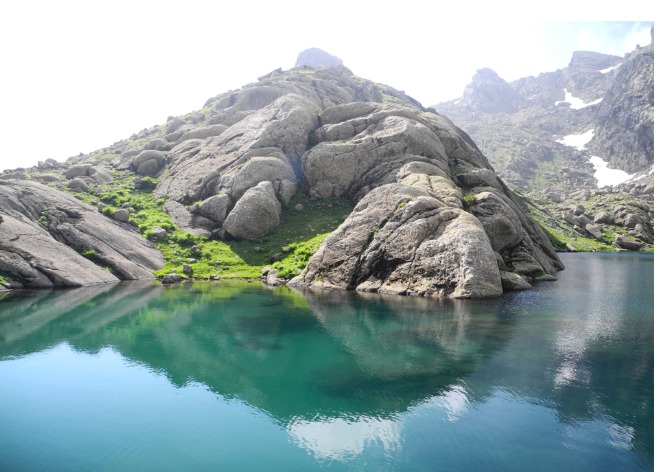
Lake Tobavarchkhili
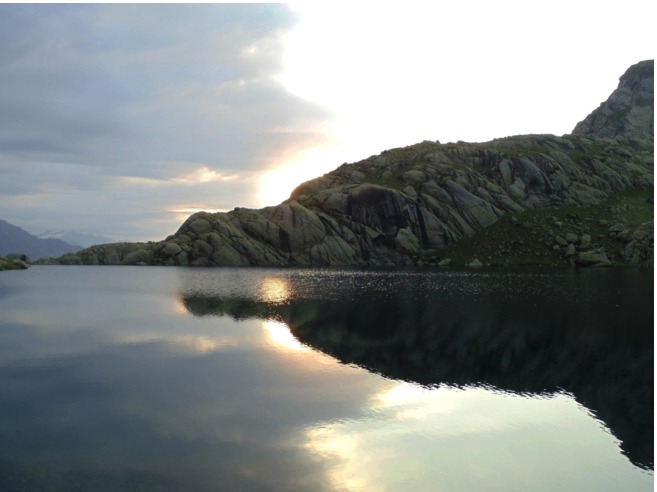
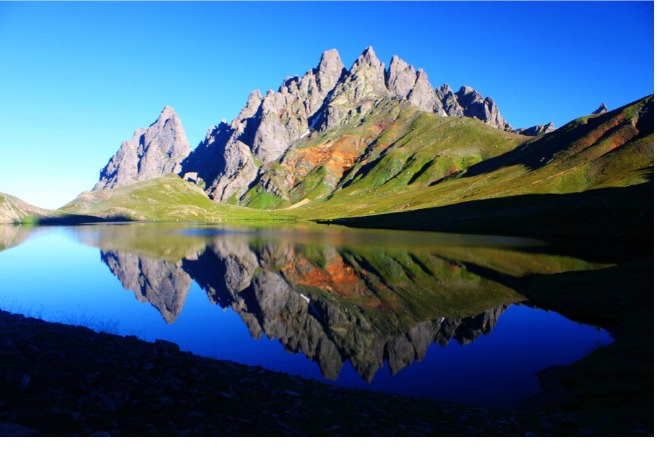
This lake makes a magnificent and unforgettable impression on anyone who sees it. Tobavarchkhili (the Silver Lake) lies in the village of Mukhuri, at an altitude of 2,650 metres above sea level.
A legend says that if you bathe in the waters of the lake, or lower any object into it, rain will inevitably follow. Tradition also holds that a bullet fired from one shore will never reach the opposite one, although the lake is not large.

The Canyon and Waterfalls of the Abasha River
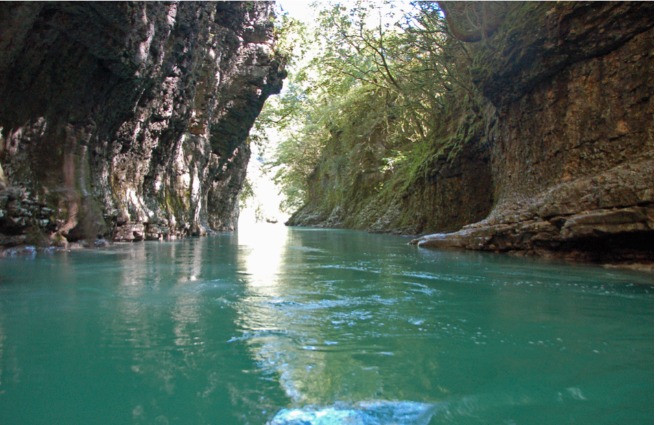
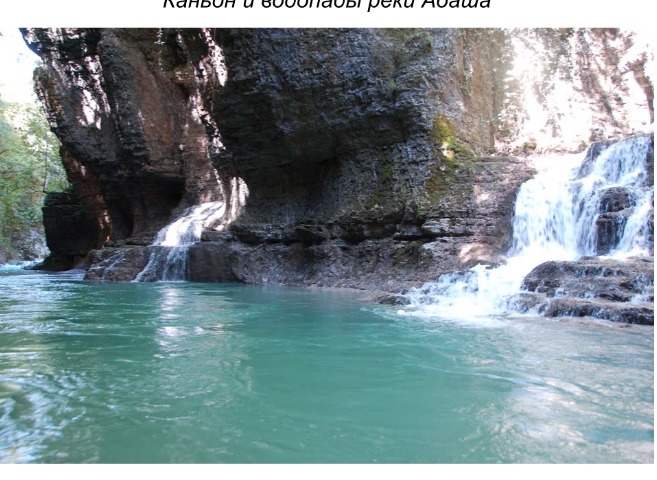
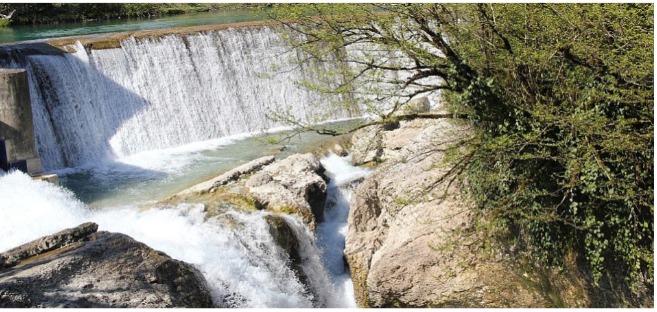
The Gachedili canyon lies between the villages of Gachedili and Inchkhuri, where the Abasha River cuts through a hill and forms a canyon 2,400 metres long and 20–40 metres deep. In several places the canyon has ledges, one of which forms the 12-metre Martvili waterfall. It is possible to travel far into the canyon by boat.
At a distance of 3.5 km from the Gachedili canyon, in the village of Pirveli Balda, lies the Motena cave. The village can be reached by car, and a footpath of 0.5 km leads to the cave on the Tabakela ridge.
The Motena cave lies at 570 m above sea level and was formed in Eocene layers of limestone. It is horizontal and ascending; its front part has collapsed and appears as an open gorge. The cave consists of two large halls joined by a narrow cleft: the first hall is 30 m long and 24–25 m high, and the total length of the cave is 75 m. Among the chemical deposits are stalactites and stalagmites, travertine cascades and so-called curtains. A river flows through it, bats nest here, and a historic structure inside was used as a fortress in the Middle Ages.
The Toba Waterfall and the Caves
After the visit, travellers return to the village of Pirveli Balda and continue by car to the canyon on the edge of the village, viewed from the bridge thrown across it. A footpath then leads to the Toba waterfall, with a resting place 5 km away in the Jvarishi locality, where there is drinking water, dry wood for a fire and room for a tent camp.
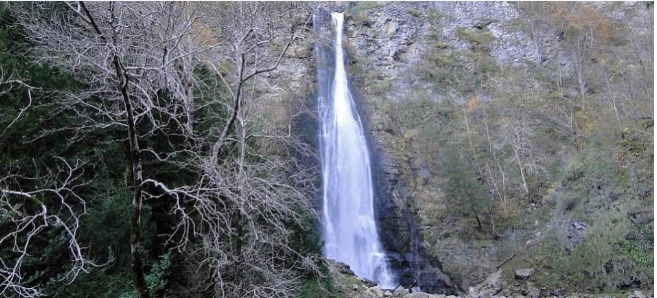
The cave of Arsena Okrojanashvili lies at 750 m above sea level and was formed in the upper layers of limestone. Its entrance is 25 m high and 11 m wide; inside, a meander 550 m long ends in a siphon lake of 150 square metres. The total length of the cave is 1,150 m. The air temperature is 14.4 degrees; an underground spring with a flow of 0.276 cubic metres per second runs through it, and a cascading waterfall 234 m high flows out of the cave.
The Oniore waterfall lies 2 km to the north-west and flows out of the Toba II cave. That cave, also at 750 m, has three branches and three halls, with a total length of 235 m. A powerful stream flows from it, forming the Oniore waterfall of 80–85 m on the surface.
The Abasha waterfall lies at 760 m above sea level and rises at the left tributary of the upper Abasha. It flows out of a cave onto a limestone cliff and falls from a height of 30 m, creating a basin 12 m in diameter at its foot. To the right of the main fall are two smaller ones, and above them a limestone cliff 200 m high.
The Jorcku cave is a two-storey cave closed on one side, beginning with a large entrance hall. Deposits, mainly stalactites, occur along its whole length, and the air temperature is 16 degrees. The cave was a Palaeolithic human dwelling: remains of cave bear, lynx, bison and other animals have been found here.
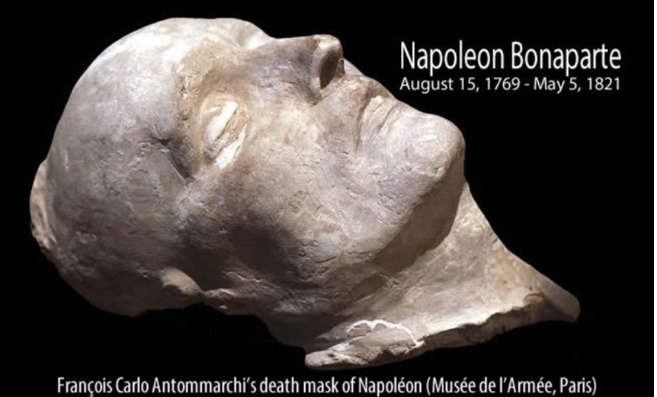
The Death Mask of Napoleon Bonaparte
Before the invention of photography it was common practice to take plaster or wax casts of the faces of famous people after their death. Napoleon died on 5 May 1821, imprisoned on the island of Saint Helena at the age of 51.
The original death mask was made on 7 May 1821. There is controversy over who took the first cast: some hold it was Napoleon's personal physician François Carlo Antommarchi, others that it was the military surgeon Francis Burton. More than one cast was probably made, since four original casts are said to exist today; numerous bronze and marble copies appeared on the market as soon as the originals reached Paris.
Another account holds that Madame Bertrand, Napoleon's assistant on Saint Helena, took part of the original cast, leaving Burton only the ears and the back of the head. A year later she presented Antommarchi with a copy of the mask, from which he made several casts; one he sent to Lord Burghersh, asking that it be given to the sculptor Antonio Canova.
One of the masks came to New Orleans: the authorities removed it in 1853, it vanished during the disorders of the Civil War, was noticed in 1866 on its way to a rubbish dump, and finally reached the Atlanta home of Captain William Greene Raoul. In 1909 the mask returned to New Orleans and was handed by the mayor to the Louisiana State Museum.
The mask came to the Dadiani family through kinship with Napoleon himself. In 1868 Achille Murat — grandson of Marshal Joachim Murat and of Caroline Bonaparte, the emperor's own sister — married Princess Salome Dadiani, daughter of David Dadiani, the last sovereign prince of Megrelia. Together with the bride, the Bonaparte family relics travelled to the palace in Zugdidi: personal belongings and furniture of the emperor, and one of Napoleon's death masks. Thus the Georgian princes Dadiani became kin to the French imperial house, and the bronze mask has remained in Zugdidi to this day.
The Murat–Dadiani line did not die out. In the 1990s Prince Alain Murat and his wife Princess Véronique came to live in Zugdidi, in the former residence of the Dadiani, took part in local feasts and church processions; Véronique still lives in Tbilisi. The mask in the Zugdidi museum remains a witness that the house of Dadiani is written into world history.
The Shroud of the Virgin Mary
One of the greatest relics of Megrelia is the shroud — the tunic — of the Virgin Mary, brought from Byzantium to Western Georgia by the ancestors of the Dadiani princes. Today it is kept in the collection of the Dadiani Palace in Zugdidi and is shown for veneration only on the great church feasts.